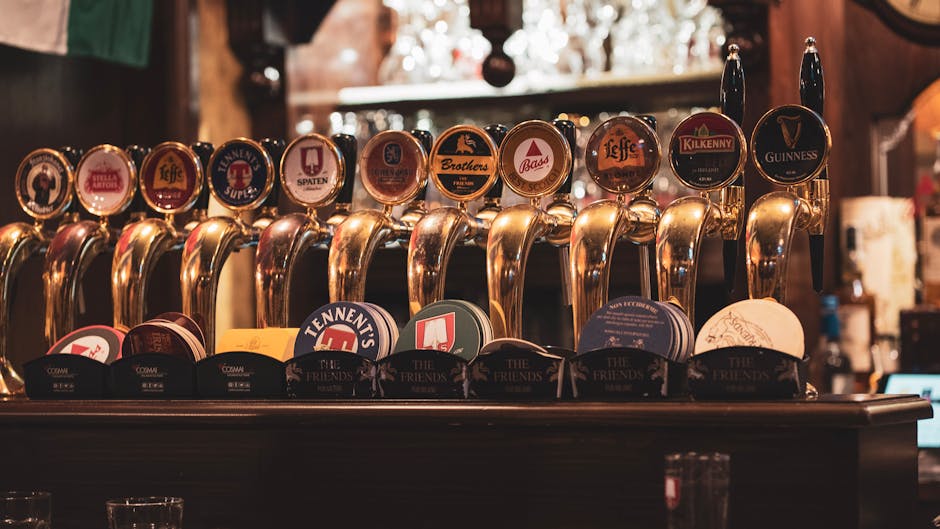
How to Pour the Perfect Pint of Guinness
Pouring a proper pint of Guinness is an art form that takes practice, but once you've got the technique down, you'll impress everyone at the bar. The secret lies in the two-part pour method, which has been perfected over generations of Irish bartenders.
Start by tilting your glass at a 45-degree angle and pulling the tap handle fully towards you. This ensures you get a good flow of beer mixed with nitrogen gas, which creates that signature creamy head. Pour until the glass is about three-quarters full, then stop and let the beer settle. This settling period is crucial—it allows the nitrogen bubbles to cascade down, creating the beautiful layered effect Guinness is famous for.
Once the beer has settled and the head has risen to the top of the glass, complete the pour by holding the glass straight and finishing with the tap at a slower pace. The final head should be about half an inch thick, sitting proud of the rim. This takes roughly two minutes from start to finish, which is why patient bartenders are the best ones.
Temperature matters too. Guinness should be served at around 42-48 degrees Fahrenheit. Too cold and you'll lose the flavour; too warm and the head won't form properly. If you're serving at home, make sure your glasses are clean and dry before pouring—any residue or water will ruin the cascade effect.
The nitrogen bubbles are what make Guinness unique compared to other beers. Unlike CO2, which creates larger bubbles, nitrogen produces tiny, fine bubbles that create a smoother, creamier mouthfeel. This is why a proper Guinness tastes so much better than one poured hastily or from a can.
Practice makes perfect with this technique. Don't be discouraged if your first attempts aren't picture-perfect. Even experienced bartenders occasionally get a pour slightly wrong. The key is consistency—pour the same way every time, and you'll develop muscle memory that makes it second nature.